
Commercial properties face a wide range of security risks, from unauthorised access and theft to vandalism, antisocial behaviour and incidents involving staff or visitors. Whether you manage an office building, retail development, warehouse, or mixed-use site, a structured security strategy can significantly reduce risk.
Effective security isn’t just about installing cameras or placing guards at entrances. It requires a combination of people, technology, procedures, and regular assessment.
Start With a Professional Security Risk Assessment
Every commercial property is different. Location, operating hours, building layout, visitor numbers, and the value of assets stored on site can all influence the level of risk.
A security risk assessment should identify:
- Vulnerable entrances and exit points
- Areas with limited visibility
- High-value assets or restricted areas
- Previous security incidents
- Visitor and contractor access procedures
- Emergency access requirements
- Risks during evenings, weekends,s or periods of low occupancy
The findings can then be used to prioritise the most appropriate security measures.
Strengthen Access Control
Controlling who can enter a building is one of the most important elements of commercial property security.
Depending on the site, access control may include electronic key cards, digital entry systems, reception teams, visitor registration, or controlled vehicle access.
Access permissions should also be reviewed regularly. Former employees, expired contractors, or lost access cards should be removed from the system quickly.
For larger properties, dividing the building into access zones can provide an additional layer of protection by ensuring individuals can only enter areas relevant to their role.
Use CCTV Strategically
CCTV can act as both a deterrent and an important source of evidence when incidents occur.
However, simply installing a large number of cameras does not automatically create an effective surveillance system.
Camera placement should focus on areas such as:
- Main entrances and exits
- Reception areas
- Car parks
- Loading areas
- Emergency exits
- High-value storage areas
- Corridors leading to restricted zones
Image quality, lighting, camera positioning, and recording retention should all be reviewed as part of the overall security plan.
Consider the Role of On-Site Security Personnel
Some commercial environments benefit significantly from trained security personnel.
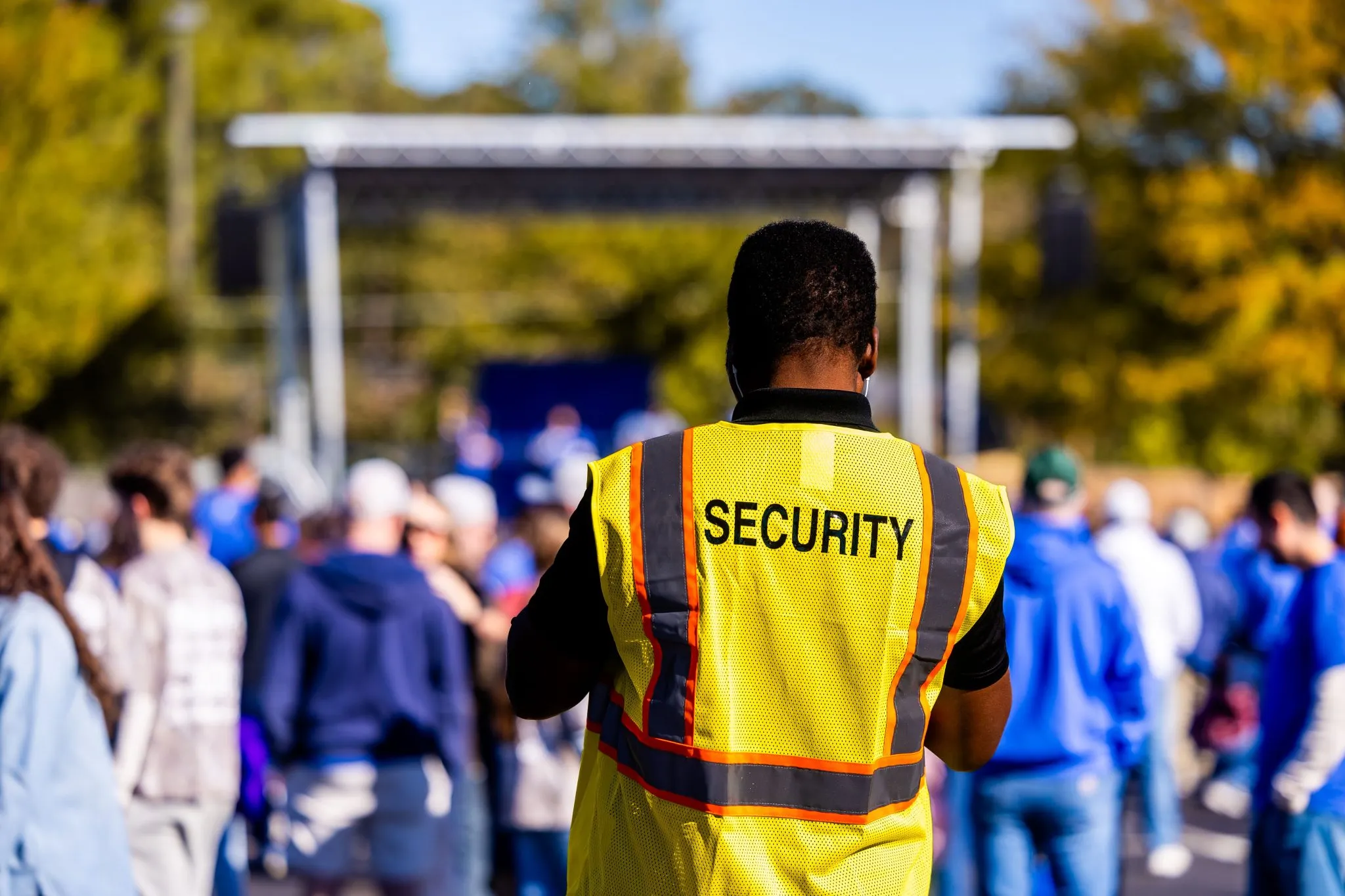
Security officers can provide a visible deterrent while also supporting access control, visitor management, patrols, and emergency response.
Their responsibilities may include monitoring entrances, conducting scheduled patrols, responding to alarms, managing incidents,s and assisting employees or visitors when necessary.
For larger or higher-risk sites, combining physical security personnel with surveillance and access-control technology can provide a stronger overall security presence.
Improve Lighting and Visibility
Poorly lit areas can increase security risks, particularly around car parks, building entrances, loading areas, and pedestrian routes.
Good lighting improves visibility for employees, visitors, security teams and CCTV systems.
Landscaping should also be reviewed. Trees, fencing, storage containers or other objects should not create unnecessary hiding places or obstruct important camera views.
Review Security Regularly
Threats, building layouts, and business operations change over time.
A security system that was appropriate several years ago may no longer reflect the way a property is currently used.
Regular security reviews can identify new vulnerabilities, outdated equipment, or operational changes that require updated procedures.
Building a Layered Security Strategy
The strongest commercial property security strategies use several measures together.
Access control can restrict entry. CCTV can monitor important areas. Security personnel can respond to incidents. Lighting and physical barriers can reduce opportunities for criminal activity.
When these measures work together, they create multiple layers of protection rather than relying on a single security solution.
Commercial property owners and facilities managers should therefore treat security as an ongoing process: assess the risks, implement appropriate controls, monitor their effectiveness, and update the strategy whenever circumstances change.